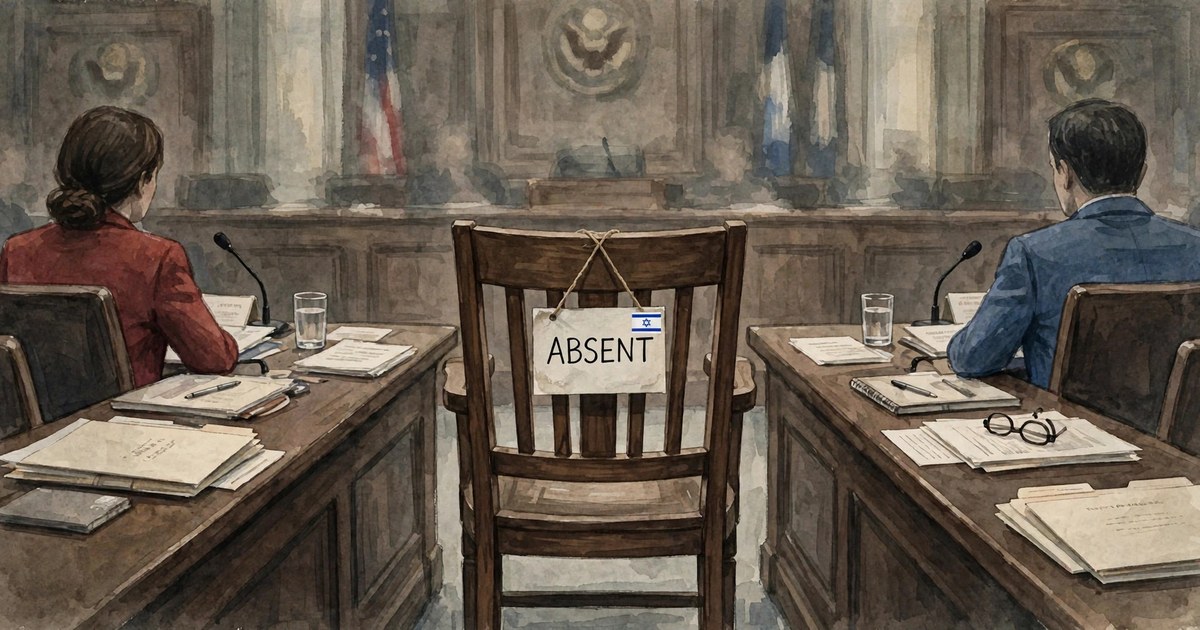
On Tuesday, November 10, the House had its first chance to move toward impeaching Secretary of Defense Pete Hegseth. It never voted on impeachment. It voted to bury the articles — and buried them by seven votes, with eighteen members not in the room.
The charges
The articles were filed by Rep. Thomas Massie of Kentucky, a Republican. They are allegations, not findings. Hegseth denies wrongdoing: “I stand behind every one of these operations.”
The resolution, H.Res.1655, carries eight articles:
1. Starting the Iran war without Congress. U.S. forces entered hostilities against Iran on February 28, 2026. Congress never declared war and never authorized one.
2. Ignoring Congress’s order to end it. Both chambers passed a resolution in June 2026 directing the President to pull U.S. forces out of the Iran hostilities. The strikes continued.
3. Missing the legal deadline. The War Powers Resolution gives a president 60 days to fight without Congress, then requires a stop. The deadline passed on May 1. The war went on.
4. Tearing down the safeguards that protect civilians — and the school strike that followed. This one is detailed below.
5. Killings at sea. The resolution counts 63 attacks on 67 boats in the Caribbean and the eastern Pacific, killing at least 221 people — people killed on suspicion of drug trafficking, including follow-up strikes on survivors in the water.
6. Retaliating against a senator. Sen. Mark Kelly, a retired Navy captain, appeared in a video reminding service members they may refuse illegal orders. The Pentagon opened an investigation into him and threatened his rank and pension.
7. Seizing Venezuela’s president. Detailed below.
8. An unauthorized war in Yemen. More than 1,100 strikes between March and May 2025, an estimated 224 civilians killed, no authorization from Congress.
The school
What is documented: In the first hours of the war, on February 28, American Tomahawk missiles hit the Shajareh Tayyebeh Elementary School in Minab, in southern Iran. Iran’s count is 156 dead. At least 120 were schoolchildren.
A preliminary U.S. military assessment, reported by CBS and CNN, found American forces were likely responsible: the targeting database still listed the school as part of a naval base next door. The school had been walled off from that base a decade earlier. The United States has not accepted responsibility. The Pentagon has released no findings; Bloomberg reported its report was all but finished months ago and held until after the elections. In September, a UN fact-finding mission concluded the strike may have been a war crime.
What the resolution alleges: not that Hegseth aimed at a school. That he spent a year dismantling the Pentagon’s civilian-protection systems — cutting more than 90 percent of the civilian-harm staff at the combatant commands, removing the military’s senior lawyers — and that a strike like Minab was the foreseeable result.
The seizure of a president
What is documented: On January 3, 2026, more than 200 U.S. special operations troops, backed by more than 150 aircraft, seized Venezuelan President Nicolás Maduro and his wife, Cilia Flores, in Caracas. They were flown to New York to face a 2020 federal drug indictment. The resolution puts the death toll from the operation at at least 83 people. Congress was not asked first.
What the resolution alleges: an act of war without authorization, dressed up as law enforcement, aimed at regime change and control of Venezuela’s oil. The administration’s stated reason is the indictment — Maduro is charged with narco-terrorism conspiracy. A reason was stated. The charge is that it was a pretext, and that carrying it out took a war Congress never approved.
The vote
The question on the floor Tuesday was not impeachment. It was whether to send the articles to the Judiciary Committee — where, as Massie warned, they would die. Rep. Darrell Issa made the motion. From the House Clerk (Roll Call 317, 6:02 PM ET):
| Votes | |
|---|---|
| Yea — refer to committee | 211 |
| Nay | 204 |
| Present | 0 |
| Not voting | 18 |
| Total membership voting | 433 |
The yeas were 210 Republicans and one independent, Rep. Kevin Kiley of California. The nays were 203 Democrats and Massie — the only Republican no. Every Democrat in the chamber voted no. Referral passed by seven. The articles expire with this Congress on January 3, 2027.
The empty seats
Eighteen members did not vote: eleven Democrats, seven Republicans. The margin was seven. If the eleven missing Democrats had voted no and nothing else changed, referral fails, 211 to 215. (If all eighteen had voted with their parties, it still passes — it was the missing Democrats who held the outcome.)
PoliVion tracks AIPAC-linked money — AIPAC PAC contributions plus contributions routed through AIPAC, from FEC filings. Here is the absence list against that record. Direct contributions only; independent expenditures are a separate mechanism and are not included.
| Absent member | Party | AIPAC-linked contributions |
|---|---|---|
| Haley Stevens (MI) | D | $1,170,383 (career 2022–2026) |
| Laura Gillen (NY) | D | $367,057 (2026 cycle) |
| Marilyn Strickland (WA) | D | $290,579 (2022–2026) |
| Steven Horsford (NV) | D | $185,938 (career 2022–2026) |
| Brittany Pettersen (CO) | D | $72,217 (career 2022–2026) |
| Julia Brownley (CA) | D | $62,767 (career 2022–2026) |
| Lou Correa (CA) | D | $48,652 (career 2022–2026) |
| Frederica Wilson (FL) | D | $33,385 (career 2022–2026) |
| Nancy Pelosi (CA) | D | $15,339 (career 2022–2026) |
| Jonathan Jackson (IL) | D | $12,900 (2022 cycle) |
| Melanie Stansbury (NM) | D | None on record |
| Rudy Yakym (IN) | R | $226,216 (2022–2026) |
| Derrick Van Orden (WI) | R | $160,102 (career 2022–2026) |
| Monica De La Cruz (TX) | R | $132,133 (2024–2026) |
| Russell Fry (SC) | R | $104,858 (career 2022–2026) |
| Julia Letlow (LA) | R | $77,868 (career 2022–2026) |
| Neal Dunn (FL) | R | $63,548 (career 2022–2026) |
| Tom Tiffany (WI) | R | $41,676 (2022–2024) |
| Total | $3,065,618 |
Seventeen of the eighteen have AIPAC-linked money on record — ten of the eleven Democrats, all seven Republicans. The exception is Rep. Stansbury, with none.
Six of the eleven Democrats explained themselves. Stansbury, Gillen, and Jackson were stuck behind the same traffic incident — a police-escorted bus blocking the route to the Capitol — and arrived after the gavel. Strickland’s office said a motorcade cost her the vote “by 1 minute.” Horsford’s office cited a personal emergency. Pelosi was in San Francisco being honored at a Veterans Day event. All six said they would have voted no.
Five Democrats — Brownley, Correa, Pettersen, Stevens, and Wilson — and all seven Republicans offered no public explanation we could find. That includes Rep. Stevens. Her $1,170,383 is the largest figure on the list: 74.5 percent of all the money she has raised.
A statement is not a vote
Two of the traffic-delayed members described what they did next in language worth reading closely.
Rep. Jackson, in the Congressional Record: “I have since entered my NO vote in the Congressional Record.”
Rep. Stansbury’s office said she “immediately filed a report stating that she voted ’no’… as recorded in the Congressional Record,” and that she had filed “a report in the Congressional Record recording a ’NO’ vote.”
Neither statement is accurate, and the difference matters. What they filed is called a personal explanation: a statement, printed in the Record, saying how a member would have voted. It is not a vote. The House’s own practice manual is blunt — after a result is announced, it is not in order, even by unanimous consent, to let a member record a vote. A House vote is open for at least fifteen minutes, and any vote cast while it is open counts. Once the result is announced, the count is final. The count stands at 211 to 204.
The loose wording is already traveling. Online, supporters are defending the missing members by repeating that “their votes were entered into the record.” At least one news write-up described Stansbury as having “voted ’no.’” She did not. Nobody who missed that vote voted in it.
If not impeachment, then what?
Impeachment is the weakest tool on this list, and it expires. Its only penalties are removal from office and, if the Senate adds it, a ban on holding office again. It cannot send anyone to prison. Once Hegseth leaves the Pentagon — fired, resigned, or replaced — removal means nothing. The Senate once tried a cabinet secretary after he had already resigned (Secretary of War William Belknap, 1876). Even a conviction then would have left only the ban.
So what else exists? More than impeachment does — on paper. Here is each route, and what has actually happened when it was tried.
American criminal law. The War Crimes Act of 1996 (18 U.S.C. § 2441) makes it a federal crime for an American to commit a war crime — the grave breaches of the Geneva Conventions, including the wilful killing of civilians. The penalty runs to life in prison, and to death if a victim dies. The law does not expire: there is no time limit on a killing. It reaches a former secretary as easily as a sitting one. What it has never done is reach up. In thirty years, the first charges ever brought under the Act came in December 2023 — against foreign fighters accused of torturing an American in Ukraine. No American commander, at any level, has ever been charged under it. The obstacles are not legal technicalities. A prosecution needs a Justice Department willing to bring it, under a president willing to allow it — and any president can end a federal case with a pardon.
The world court. The International Criminal Court in The Hague tries individuals for war crimes, crimes against humanity, genocide, and aggression. The United States is not a member and does not accept the court. But the court’s reach is based on where a crime happened, not only on who committed it. Venezuela is a member state, so killings on Venezuelan soil during the Caracas raid fall inside the court’s map on paper. Iran is not a member, so Minab falls outside it — unless the UN Security Council refers the case, where the United States holds a veto, or Iran itself invites the court in. And the one charge that fits starting an illegal war — aggression — is the charge the court’s own rules bar it from bringing against citizens of non-member countries.
The record of trying: the court opened an investigation in Afghanistan that included American personnel. The United States answered with sanctions — against the court’s prosecutor and judges in 2020, again under Executive Order 14203 in 2025, and in October 2026 against the court itself. On November 9, Secretary of State Marco Rubio said in Paris that no American commander will stand trial there. The court also has no police force. An arrest requires a country willing to make one.
Other countries’ courts. Some countries claim universal jurisdiction: their courts can try war crimes committed anywhere, by anyone. It has worked — against people within reach. In 1998, Chile’s former dictator Augusto Pinochet was arrested in London on a Spanish warrant; Britain’s highest court ruled a former head of state has no immunity for torture. He was released on health grounds and never stood trial, but the ruling stands. In 2022, a German court sentenced a former Syrian intelligence officer, Anwar Raslan, to life in prison for crimes against humanity — he was living in Germany. Against Americans, the record is different. Germany’s federal prosecutor dismissed war-crimes complaints against Secretary of Defense Donald Rumsfeld in 2005 and again in 2007. No senior American official has ever faced a foreign courtroom this way. The realistic consequence is narrower and still real: open files, and countries a former official cannot safely visit.
Civil suits. Families can sue — and mostly hit a wall. A federal law called the Westfall Act converts any suit against a federal official for acts done in the job into a suit against the United States itself. The government’s own liability law then excludes the two things at issue here: combatant activities, and anything that happened in a foreign country. That is the wall facing the families of the boat-strike victims now looking for a court.
The chain of command. International law has a doctrine for exactly this structure: command responsibility. A commander is criminally responsible for crimes he orders — and for crimes by forces under his control that he knew about and failed to stop or punish. It runs in both directions. Hegseth sits at the top of the Pentagon. He does not sit at the top of the chain. The orders he carries out come from the President, who is commander in chief. Hegseth’s own defense is that he executed the President’s operations. The President’s answer, the day before the vote: “I’ll stand by him.”
None of these routes is fast, and none has ever reached an American official at this level. But unlike impeachment, none of them expires when he leaves the building.
Our read
Two things the absence table does not prove. It does not prove any member stayed away on purpose. And it does not prove AIPAC money caused a single absence — AIPAC-linked money is the normal condition of this House, and the members stuck behind the police escort include the one member on the list with no AIPAC money at all. Claims already circulating that the absent Democrats were paid to miss this vote have no record behind them.
What the table does show is the shape of the risk. The charges were about wars launched without Congress. That is the ground where pro-Israel, pro-war alignment and its money do their work in this House. When a party is unified, attendance is a detail. The Democratic Party entering this House in January is not unified on those questions — and in a divided party, outcomes stop turning on vote counts and start turning on who is in the room. On Tuesday the room was missing eleven Democrats on a seven-vote margin. Ten carried AIPAC-linked money. The most heavily AIPAC-funded member on the list — three quarters of everything she has raised — is one of the five who have said nothing. One vote is an anecdote. The watch is the next war vote, and the one after that: if the same names keep missing, that is a pattern, and we will be counting.
And count the limit of the whole exercise. Impeach Hegseth, remove him, ban him — and not one order changes. He is carrying out Trump’s commands. The torch passes to the next secretary, who receives the same orders from the same commander in chief. That is why the accountability question does not end at impeachment, and why it does not end when he leaves office.
Sources: House Clerk, Roll Call 317, clerk.house.gov/Votes/2026317; H.Res.1655, full text via the sponsor’s office, and the article-by-article summary in Small Wars Journal (Arizona State University), Nov 9, 2026; House Practice, Ch. 58 (Voting), Office of the Parliamentarian via GPO; Congressional Record statements of Reps. Jackson and Stansbury and her office’s public statement, Nov 10, 2026; Reuters, CNN, USA Today, and Military.com reporting on the articles, the Minab school strike, and the Pentagon investigation, Nov 9–10, 2026; UN Independent International Fact-Finding Mission on Iran, September 2026, as reported by CNN; Congressional Research Service, “War Crimes: A Primer” (18 U.S.C. § 2441); Rome Statute of the International Criminal Court, Arts. 12, 15bis, 127; reporting on U.S. sanctions under Executive Order 14203, including the October 2026 designation of the Court itself; AIPAC-linked contribution figures from PoliVion’s tracker and FundVoter state trackers (FEC filings through Sep 30, 2026), direct contributions only, windows as noted in the table.
Why this is on PoliVion
PoliVion follows the money and the paper behind American politics. This article sits where the two meet: eight articles of impeachment, a seven-vote margin, eighteen empty seats, and a funding record that shows the shape of the risk even where it cannot prove a motive.
The People’s Intent → The Flip Side — The Speaker Strategy → All PoliVion articles → ← Back to the dashboard