Democrats won the House on Tuesday, and the gavel is spoken for. Hakeem Jeffries has led House Democrats since 2023, and when the new Congress convenes on January 3, 2027, he is set to be elected Speaker — the first test of the new majority is whether anyone makes him earn it.
Start with the money, because that is what this page tracks. Jeffries is AIPAC-funded: $1,024,341 in direct contributions from AIPAC’s PAC and AIPAC-routed giving across the 2022–2026 cycles, in FEC records compiled via FundVoter. United Democracy Project, AIPAC’s super PAC, spent $0 in his race — it never had to. The support is not outside spending aimed at his opponents; it is money given to him directly. And the ladder under him is funded the same way: the three elected officers who would run the House with him — the whip, the caucus chair, and the vice chair — are all AIPAC-backed too. Their figures are below.
The challenge, if it comes, is already visible. Five first-term winners backed by the Democratic Socialists of America — Melat Kiros of Colorado, Darializa Avila Chevalier and Claire Valdez of New York, Donavan McKinney of Michigan, and Chris Rabb of Pennsylvania — plus Adam Hamawy of New Jersey won their seats and are organizing as a bloc with conditions attached to their Speaker votes. PoliVion laid out that bloc, and what it could demand, in Will Anyone Challenge Jeffries?. A conditions bloc is not the same thing as an alternative. For that, somebody has to be willing to be the name.
So who could be? PoliVion ran the Democratic winners through the same three tests as the Senate version of this article:
- No AIPAC money. Nothing from AIPAC’s PAC or its routed giving.
- Not Jeffries’ ladder. The job cannot go to his whip, his caucus officers, or the team he runs the caucus with — a new nameplate on the same operation is not a change.
- A real leadership record. Committees chaired, caucuses run, governments led — not just seniority.
One hundred and eighteen of the 252 Democratic winners are not AIPAC-backed. Most are too new to have run anything. Run all three tests and the bench is five names long — four of them completely clean, and one gray-ring name whose record is twenty years old and printed here in full.
What the job actually is
The Speaker is not chosen by the Democratic caucus behind a closed door — that is the Senate’s way. The whole House elects the Speaker, in public, by name, on the floor, on January 3. With full attendance it takes 218 votes.
The arithmetic is the unusual part of this fight. Democrats have won at least 252 seats. A challenger does not need a single Republican vote; the votes for a different Speaker already exist inside the Democratic caucus, if the caucus ever decides to use them on somebody else. What a challenger needs is not arithmetic. It is a name 218 Democrats can land on at once.
The job itself is the floor: what gets voted on, what gets buried, which bills move and which get a promise. The Speaker also steers committee assignments and the Rules pipeline that shapes every bill before it reaches a vote. One more thing the Constitution is clear about, by silence: it does not require the Speaker to be a member of the House. Every Speaker so far has been one — but the office belongs to whoever the House picks.
Ro Khanna
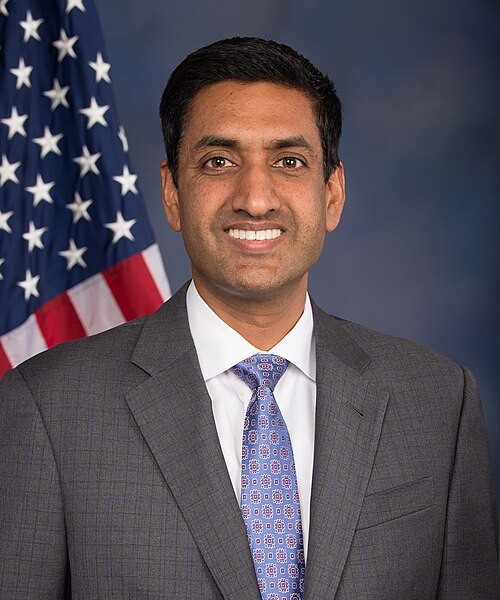
California 17 · In the House since 2017
The case
Ro Khanna is the name already in circulation. Since the election, the pairing “Khanna for Speaker, Warren for Senate Leader” has been shared widely, and Khanna has spent the fall publicly demanding new Democratic leadership — his named target was Senator Schumer, whose handling of the 2025 shutdown he called “the final straw.” He has not called for Jeffries to be replaced. What he has done is establish that he is willing to say, on the record, that the party’s leadership class should turn over — almost nobody else with a national profile has.
He has been in the House since 2017, representing Silicon Valley, and served as a national co-chair of Bernie Sanders’ 2020 presidential campaign — a cycle spent building lists and coalitions in states most House members never visit. His record in PoliVion’s files is clean: no AIPAC-linked FEC record at all.
The catch
He has never chaired a committee or held a top caucus post. Khanna is an ideas-and-media operator — books, interviews, town halls — not a proven vote-counter, and the Speaker’s job is mostly counting. The circulation of his name is a media fact, not a caucus fact: no whip count with his name on it has ever been tested.
The money: $0 from AIPAC. $0 from other pro-Israel PACs. No AIPAC-linked record in the FEC data at all.
Marcy Kaptur
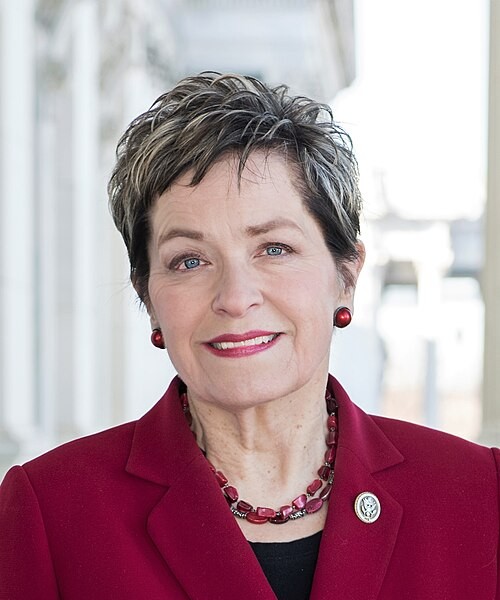
Ohio 09 · In the House since 1983
The case
Marcy Kaptur has the deepest record on this list by decades. She entered the House in 1983; she is now in her 22nd term and is the longest-serving woman in congressional history. She has sat on the Appropriations Committee since 1990 — the committee that writes the spending bills the Speaker’s floor exists to pass.
She has also stood for this exact job before, on exactly this argument. In 2002, Kaptur challenged Nancy Pelosi for Democratic leader, running explicitly for what she called the party’s “non-money wing” — the members and voters the donor class does not speak for. That phrase is twenty-four years old. It describes the test this article applies.
And she is nearly impossible to beat at home: she keeps winning an Ohio district that has been redrawn against her more than once, most recently into a narrow 2024 win in a seat drawn for a Republican.
The catch
She is 80 years old. And the 2002 run ended the way challenges to entrenched leaders usually end: she withdrew before the vote rather than forcing the caucus to choose. The record says she was right about the money a generation before it was fashionable to say so. It also says that when the moment came, she did not make them vote on it.
The money: $0 from AIPAC. $0 from other pro-Israel PACs.
Jim McGovern
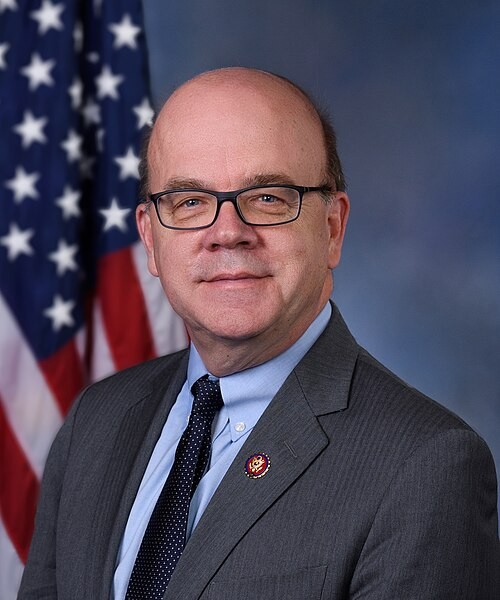
Massachusetts 02 · In the House since 1997
The case
Jim McGovern is the mechanic on the list. From 2019 to 2023 he chaired the Rules Committee — the panel that writes the terms under which every bill reaches the floor. The Speaker’s power runs through Rules; McGovern has operated that machinery for four years, under live fire, in a majority. Almost nobody else in the caucus can say that.
He is also the rare senior member whose stated priorities include the subject of this article: campaign finance reform has been a stated priority of his for years, alongside food security work that made him the House’s leading voice on hunger. He has been in the House since 1997 and has never taken AIPAC money.
The catch
He is a proceduralist from the Pelosi-era operation — a man of the institution, not a public movement leader, with no national profile to bring into the room. And for all his years in the leadership’s machinery, he has never sought the top job or built the coalition a run at it would need.
The money: $0 from AIPAC. $0 from other pro-Israel PACs.
Greg Casar
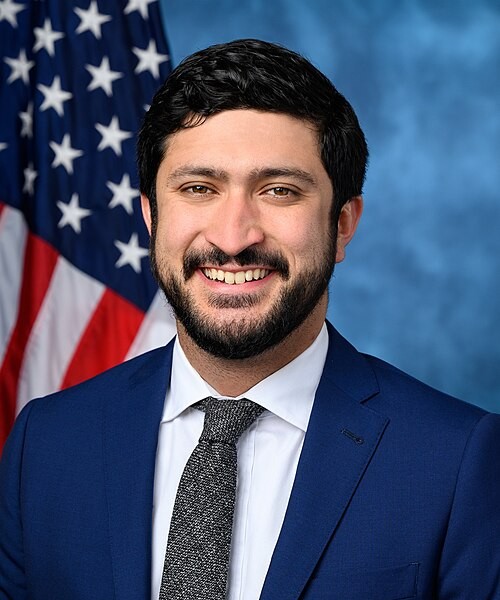
Texas 37 · In the House since 2023
The case
Greg Casar is the only person on this list who currently runs a whipping operation. He chairs the Congressional Progressive Caucus — the bloc of roughly a hundred House Democrats whose votes are the ones a Speaker most often has to find. The CPC counts its members’ votes for a living, and Casar runs it.
Before Congress he served on the Austin City Council, elected in 2014 — he has governed, in a body where he had to assemble majorities in public. He was elected to the House in 2022. In the conditions-bloc fight already forming over the Speaker vote, the CPC chair is the person both sides will have to talk to; he is on this list because he already holds the lever the fight will be about.
The catch
Two terms. Casar is the least senior person here by decades — Kaptur had been in Congress for forty years when he arrived. A caucus that has never made a two-term member its leader would be inventing a new tradition, and the CPC chairmanship, while real, is the leadership of the already-convinced.
The money: $0 from AIPAC. $0 from other pro-Israel PACs.
Hilda Solis
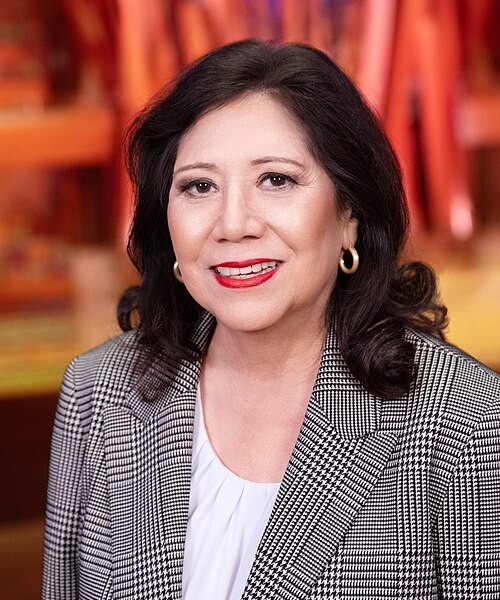
California 38 · Secretary of Labor, 2009–2013
The case
Hilda Solis has the deepest executive record on the bench. She served in the House from 2001 to 2009, then spent four years as U.S. Secretary of Labor — running a cabinet department of some 17,000 people — and then held a seat on the Los Angeles County Board of Supervisors, governing a county larger than most states. She has now returned to the House. Nobody else here has run anything that size.
She is this list’s gray ring, and the label needs its facts attached. Solis has taken no AIPAC money, ever. She has taken $3,515 from other pro-Israel PACs — CAJD, JAC, J Street, and WAFI — and every dollar of it arrived between 2000 and 2008, during her first House service, two decades before this election.
The catch
That is still the catch: she is the only name on this list with any pro-Israel PAC money at all. It is small, it is old, and it is printed here because it is on the record. Voters deciding whether “no money from the network” means none, ever, will have to weigh twenty-year-old contributions against the strongest executive résumé in the field.
The money: $0 from AIPAC. $3,515 from other pro-Israel PACs, all of it from 2000–2008.
The money, side by side
Every figure below is a direct contribution — money given to a candidate. Independent expenditures, money a PAC spends on its own, are a separate mechanism and are never folded into this table.
| Candidate | AIPAC | Other pro-Israel PACs |
|---|---|---|
| Ro Khanna | $0 | $0 |
| Marcy Kaptur | $0 | $0 |
| Jim McGovern | $0 | $0 |
| Greg Casar | $0 | $0 |
| Hilda Solis | $0 | $3,515 |
| Total | $0 | $3,515 |
Who doesn’t clear the filter
Katherine Clark is the Whip — Jeffries’ No. 2 — and she fails the money test on her own: $710,770 in AIPAC-backed giving.
Pete Aguilar, the Caucus Chair, is AIPAC-backed: $1,328,371 — the largest figure on the leadership ladder.
Ted Lieu, the Vice Chair, is AIPAC-backed: $870,966.
The entire elected team under Jeffries fails both tests this article applies: they are his ladder, and they are funded. Everyone else in the caucus is one of three things — AIPAC-backed, seated somewhere in that leadership structure, or too new to have built a leadership record. Two other clean records, Bennie Thompson and Jamie Raskin, are not on this list — both are defined nationally by the January 6 committee.
Our read
The votes for a different Speaker already exist. Democrats hold at least 252 seats; the gavel takes 218; no Republican vote is required, and the election happens in public, on the floor, name by name. Arithmetically, this is the most winnable leadership fight in either chamber.
And yet the bench above is what it is: four members with no AIPAC money at all and one with $3,515 from twenty years ago, against an incumbent whose own AIPAC figure passes a million dollars and whose entire elected team is funded the same way. Every name on this list starts from zero. The whole current ladder starts from seven figures of organized support. That gap — not the vote count — is the real shape of the race.
The obstacle is not arithmetic. It is incumbency: a leader who has never lost a vote he scheduled, a team that controls the calendar the challenge would have to run on, and a caucus that has not picked a fight with its own leadership in a generation. The names exist. Whether anyone makes the House vote on one is the only question January 3 will answer.
Sources: Money figures are FEC records: for Jeffries, Clark, Aguilar, Lieu, and the five candidates’ current records, FEC data via FundVoter — direct contributions, career totals across the 2022–2026 cycles, data through the October 14, 2026 pre-general coverage. Solis’s 2000–2008 contributions are FEC records via TrackAIPAC. House seat counts are from PoliVion’s live election results tracker, November 6, 2026. Kaptur’s 2002 leadership run and the service records cited are from Wikipedia and the Office of the House Historian. Khanna’s remarks on Senate leadership are from NBC’s Meet the Press and his public statements since.
The whole House, marked
Every member of the new House — winners and the races still being counted — with their AIPAC status, is on PoliVion’s live results page. The Senate version of this same fight is the Schumer story.
Every member, marked → The Senate version → ← Back to the dashboard