Democrats will hold 54 Senate seats when the new Congress convenes on January 3, 2027, with Alaska and Mississippi still uncalled. The majority leader’s job belongs, by incumbency, to Chuck Schumer, who has led Senate Democrats since 2017. The argument over whether it should is already running — and it is not really an argument about Tuesday. It is an argument about the last time his leadership was tested at full scale: the shutdown.
The shutdown is the center of the case against him, so here is the record. From October 1 to November 12, 2025 — 43 days, the longest government shutdown in American history — the federal government was closed in a standoff whose stated Democratic price for reopening was an extension of the enhanced Affordable Care Act health care subsidies. The deal that ended it was negotiated by a group of Democratic centrists directly with Republicans. It reopened the government without the extension. What Democrats got for 43 days was a promise of a December vote. The subsidies — the priority the shutdown was fought over — were not won, and while the government sat closed, nothing else could move either.
Schumer voted against that deal himself. His critics’ answer is that the leader’s job is the caucus: eight of his own members cut the deal anyway, and his own deputy leader, Dick Durbin, was one of the eight. Rep. Ro Khanna put the verdict plainly on Meet the Press: “He doesn’t inspire confidence. He’s not bold. He’s out of touch with the grassroots... And this was the final straw where he was not strong on fighting for health care.” Khanna has called for Schumer to be replaced outright. More than a dozen House Democrats said the same.
So the live question is not whether Schumer has critics. It is who would be better. PoliVion ran the full Democratic caucus through three tests:
- No AIPAC money. Nothing from AIPAC’s PAC or its routed giving.
- Not Schumer’s line. The job cannot go to his deputies, his whips, or the elected team he runs the caucus with — a new nameplate on the same operation is not a change.
- A real leadership record. Committees chaired, campaigns run, institutions built, governments led — not just seniority.
Start with 54 Democratic senators. Thirty of them are AIPAC-backed. Most of the experienced remainder sit somewhere inside the current leadership structure. Run all three tests and the bench is four names long. That thinness is not a lack of looking; it is what the tests leave. And depth matters, because the strongest résumé on the list already carries a major committee, a running oversight fight with the Treasury Department, and a caucus office at the same time.
What the job actually is
The majority leader is not elected by the country, or even by the full Senate. The Democratic caucus picks its leader in a closed-door vote, by a majority of the caucus — with 54 seats, that is 28 votes.
The job itself is mostly one power: the floor. The leader decides what gets voted on and when — which fights get scheduled, and which get a promise. Passing a bill takes 51 votes on a good day and 60 to break a filibuster on most legislation; confirming judges and officials takes 51. The rest of the job is holding 54 members, who answer to 54 different states and — as PoliVion documents — often to different funders, inside one caucus long enough to use those numbers.
That is why the shutdown is the test case critics keep returning to. A leader cannot cast anyone else’s vote. What a leader controls is the strategy, the schedule, and whether the caucus’s stated fights end in law or in a promise of a later vote.
Chris Van Hollen
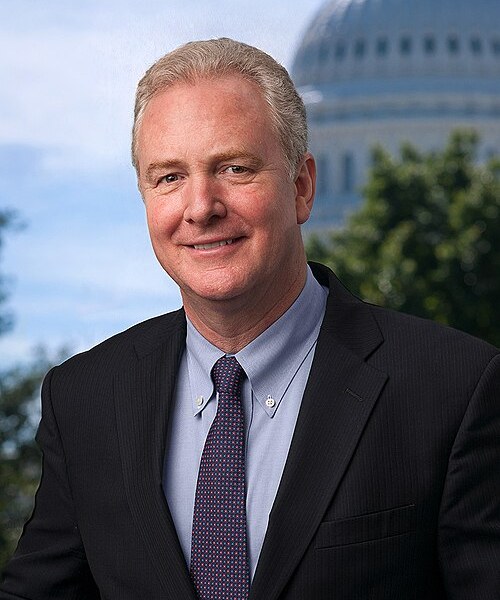
Maryland · In the Senate since 2017
The case
Chris Van Hollen is the organizer of the four. From 2007 to 2011 he chaired the Democratic Congressional Campaign Committee — the House party’s campaign arm — running the 2008 cycle that expanded the Democratic House majority and the 2010 cycle that lost it. He has operated a national campaign in both directions. He followed that as the House Budget Committee’s top Democrat.
In the Senate, he chaired the Democratic Senatorial Campaign Committee in 2017–19 — the job that recruits candidates and funds races in every state. Many of the senators who would vote in a leadership election are people whose campaigns he ran or funded. He knows the caucus’s map member by member, because he helped draw it.
He also came up outside Schumer’s line: his career was built in the House, in Nancy Pelosi’s operation, not on the Senate leadership ladder. And the conversation has already started. Axios reported that talking points promoting Van Hollen circulated among progressives after the election, and Khanna has pointed to him among the party’s dynamic leaders. Van Hollen himself has said he is not actively seeking the job.
The catch
He has never counted votes on the Senate floor. Running campaigns against Republicans is a different skill from holding 54 Democrats together through a filibuster fight, and his Senate record is committee work, not floor whipping. His DSCC chairmanship was also a job Schumer appointed him to — service inside the system, even if he was never the man’s deputy.
The money: $0 from AIPAC. $112,125 from J Street PAC.
Elizabeth Warren

Massachusetts · In the Senate since 2013
The case
Elizabeth Warren built an institution. As a special advisor at the Treasury Department in 2010–11, she took the Consumer Financial Protection Bureau from a provision in a law to a working federal agency — staffed, funded, and operating. Almost nobody in the Senate has a comparable line on their record: she did not just vote on a policy, she constructed the machinery.
She holds elected office in the caucus now — Vice Chair of the Democratic Conference — and the top Democratic seat on the Banking Committee. From Banking she has run a sustained oversight fight with the Treasury Department: more than 100 letters to Secretary Scott Bessent, demanding answers on everything from shell-company rules to bond buybacks. It is the clearest current example in the caucus of a senator using institutional leverage on purpose.
She is also half of the pairing that went viral after the election: “Khanna for Speaker, Warren for Senate Leader.” Her name is already at the top of the public version of this list.
The catch
Warren is 77, and the knock on her inside the caucus is that she is a policy fighter, not a vote-counter — colleagues who admire the record still question whether she can hold moderates she has spent a career arguing with. She is also already loaded: Banking, the Treasury fight, and the conference vice chair at once. Depth is the argument for having a bench at all, and she is the reason it is needed.
The money: $0 from AIPAC. $16,483 in total tracked pro-Israel PAC money (JACPAC) — one of the lightest footprints in the Senate.
Tim Kaine
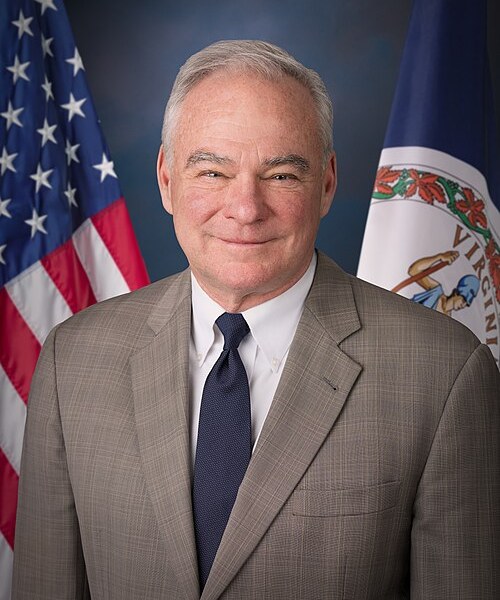
Virginia · In the Senate since 2013
The case
Tim Kaine’s record is executive. He governed Virginia from 2006 to 2010, through the financial crisis. He chaired the Democratic National Committee from 2009 to 2011 — he has run the national party itself. In 2016 he was the vice-presidential nominee, vetted for a national ticket. Nobody else on this list has run both a state government and a political party.
The case for him is steadiness: a leader who has managed large organizations, negotiated with legislatures he did not control, and is trusted in rooms that agree about very little else.
The catch
He has never held a post in the Senate caucus; his leadership record is entirely outside the chamber he would lead. And his own shutdown record cuts against him in this specific argument. Kaine was one of the eight Democrats who voted to end the shutdown without the subsidies, and he then publicly defended Schumer against the replacement calls, telling House Democrats to stay in their own lane. If the case against Schumer is the shutdown, Kaine was on the deal’s side of it. Add that he was Hillary Clinton’s running mate, and his is the establishment résumé on a list built by an anti-establishment moment.
The money: $0 from AIPAC. $202,949 from other pro-Israel PACs — $177,949 from J Street and $25,000 from NORPAC.
Bernie Sanders
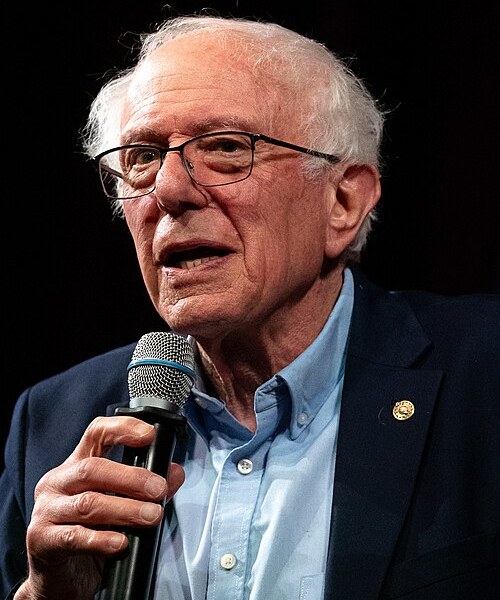
Vermont · Independent caucusing with Democrats, in the Senate since 2007
The case
Bernie Sanders is the record-strongest outsider in the caucus. He chaired the Budget Committee from 2021 to 2023 — the post that runs the reconciliation process, the one vehicle that moves a majority’s biggest bills past a filibuster — and then the HELP Committee, covering health, education, and labor, from 2023 to 2025.
Across two presidential campaigns he built the largest small-donor organizing operation in the party: millions of people giving small amounts, with no dependence on the donor class the other names on this list still have to call. The platform moved with him. The $15 minimum wage, Medicare for All, and tuition-free public college entered the Democratic mainstream as his positions before they were anyone else’s.
And he is nobody’s deputy. An independent who caucuses with the Democrats, he is not Schumer’s line or anyone else’s — the only name here whose independence is structural rather than biographical.
The catch
He is 85, and he is an independent who has never held the caucus’s internal offices or wanted them. The votes for Sanders are very unlikely to exist, and everyone in the room knows it — including, in all likelihood, Sanders. He is in this article because his record passes the tests. That is a statement about the bench, not a prediction.
The money: $0 from AIPAC. $9,100 from J Street PAC — the smallest footprint of the four.
The money, side by side
Every figure below is a contribution. Independent-expenditure support — money a PAC spends rather than gives — is a different mechanism, and the one such figure in this article is labeled where it appears below rather than folded into this table.
| Senator | AIPAC | Other pro-Israel PACs |
|---|---|---|
| Chris Van Hollen | $0 | $112,125 |
| Elizabeth Warren | $0 | $16,483 |
| Tim Kaine | $0 | $202,949 |
| Bernie Sanders | $0 | $9,100 |
| Total | $0 | $340,657 |
Who doesn’t clear the filter
Brian Schatz is Schumer’s chief deputy whip. The pick would be the current operation with a new nameplate, and the line test ends his case before the money question starts. (His AIPAC figure is also $0; J Street PAC: $99,330.)
Tammy Baldwin has been Conference Secretary since January 2017 — an elected officer on Schumer’s own leadership team. Same test, same result. ($0 from AIPAC; $545,813 in J Street PAC contributions, plus $21,884 in independent-expenditure support from JDCA PAC — a separate mechanism, labeled as such.)
Chris Murphy holds a junior seat on the same team, Deputy Conference Secretary — the only leadership post he has. The line test covers him too.
Cory Booker is AIPAC-backed: $707,803 in AIPAC PAC contributions documented in 2025 alone — more than any other Senate Democrat that year. Amy Klobuchar is AIPAC-backed: $270,620 from AIPAC’s PAC. Patty Murray is AIPAC-backed: $174,985 from AIPAC’s PAC.
Everyone else in the caucus is one of three things: AIPAC-backed, seated somewhere in the leadership structure, or not in the Senate long enough to have built a leadership record. That is the whole bench problem in one sentence.
Our read
This is the Speaker’s fight with the names changed. In the House version, the question was never only whether Hakeem Jeffries keeps the gavel — it was whether changing the name changes the funding underneath it. The Senate version has the same shape. The caucus is not choosing between a funded leader and an unfunded one: all four senators in this article take no AIPAC money, and all four take money from somewhere in the same neighborhood of PACs, because the senators who take neither do not have leadership records yet, and the senators with the records are mostly inside one circle or the other.
What a leader actually controls is the floor — which fights get 43 days and which get a promise. The deepest argument against Schumer was never his own vote; he voted no. It is that under his leadership, the caucus’s stated priorities end as promises of later votes. A new leader would inherit the same 54 members and the same money behind most of them. The nameplate is the smallest part of this job. The circle the leader answers to is the job.
Sources: Senate results and AIPAC status are from PoliVion’s live election count and Senate records, checked November 6, 2026. Money figures are FEC records: for sitting senators, WhoFundsMyRep’s FEC-based tallies held in PoliVion’s Senate files; for Sen. Booker, PoliVion’s 2026 race records (FEC data via FundVoter). Figures are tracked totals across each senator’s career in federal office, and contributions are never combined with independent expenditures in this article. The shutdown record is from the Associated Press and contemporaneous reporting on the October 1–November 12, 2025 shutdown and the agreement that ended it. Rep. Khanna’s remarks are from NBC’s Meet the Press (November 16, 2025) and his public statements since; reporting on talking points promoting Sen. Van Hollen is from Axios (November 2026).
The whole Senate, marked
Every senator — winners, holdovers who were not on the ballot, and the seats still being counted — with their AIPAC status, is on PoliVion’s live results page. The House version of this same fight is the Jeffries story.
Every senator, marked → The Jeffries fight → ← Back to the dashboard